Unknown's avatar

About oxhilldevons

My family and I operate a small farm raising American Milking Devon cattle, training oxen, making ox equipment and living the country life.

Rundell’s Improved Ox Bow

Taken from Scientific American Aug 13, 1887

AN IMPROVED OX BOW

The invention herewith illustrated provides an ox bow which will not bear upon the windpipe or the veins or arteries of the neck and has been patented by Mr Luman Rundell, of Grapeville NY. The bow as represented is formed partly of wood and partly metal, the metal portion being made tubular and forming an enlarged lower part of the bow, which is of sufficient size to relieve the lower part of the throat of ox from any pressure of the bow. It may, however, be made entirely of wood bent into the form shown, even of a piece of gas pipe bent into suitable form.

The actual patent is linked below.

US366883

Book Overview: Oxen a Teamster’s Guide 2nd edition

This is the first of several book overviews I plan to do on ox related books.  I am in no way a literary critic, but I thought people might benefit from a brief description so as to know what to expect from a particular book.

Oxen..A Teamster’s Guide is the latest book on oxen by Drew Conroy.  I suspect very few people, if anyone, has spent as much time studying oxen, their history, and their use as Drew.  I am certain that no one else has written so much on the subject.  What’s more, he  is, himself, a Devon man.  I have heard this book frequently referred to as the “ox bible”.   If such a thing exists, then this is it.  It’s just shy of three hundred pages broken up into no less than nineteen chapters covering such subjects as history, health, hoof care, training, housing, equipment, working, and international development to name a few.  Its pages are full of informative pictures and illustrations. It also includes three appendices covering breeds, yoke and bow sizes, and nutrition.  I thought I had heard just about every ox term at one point or another, but the glossary had a number of them that proved me wrong.  A great touch to the book is the “On The Farm” pages where Drew gives a personal account  of particular teamsters that he has met in his extensive travels.  It doesn’t hurt that page seventy-seven is committed to my father!  On the back cover the book is labeled in big bold letters, “OPERATING MANUAL FOR THE MIGHTY OX” and that is just what it is.  If you are interested in oxen then this is a must read.

How to measure and fit an ox yoke.

  1. Yokes are typically made in sizes 4″ thru 12″.  The size refers to the width of the bow as measured from inside to inside of the bow holes.
  2. To measure your animal, place a stick on either side of the animal’s neck where the yoke would sit at rest.  While keeping them parallel, have a helper measure the distance between the sticks. If you have two framing squares you can rubber band them together to create a big set of calipers and take the same measurement.
  3. Most yoke makers will use the bow width to calculate the distance between the oxen in a double yoke but if you feel it necessary, you can measure the widest part of the animal’s belly the same way you measured the neck.
  4. One quick way to check for a properly fitting yoke is to slide your hand flat between the bow and the animal’s neck.  On a small yoke, the tips of your fingers should fit.  On a medium yoke, the base of your fingers should fit and on a large yoke,              the palm of your hand should readily fit between the neck and bow.
  5. More importantly, you should watch how the yoke fits while working your cattle.  In a hard pull, the bow should slip between the animal’s shoulder and neck.
  6. If the bow hits the point on the front of the shoulder, the bow is too wide and will cause damage and discomfort to the animal.
  7. The bow’s height should be adjusted so that when at rest the bow is slightly pulling up on the dewlap but not pressing into the meat of the neck.
  8. The esophagus is protected by muscle in the neck but between the neck and brisket it is exposed.  Using a bow that is adjusted too low will cause damage and discomfort to the animal.
  9. Inexperienced teamsters have a great tendency to use yokes that are too big and bows that are adjusted too low.  It is better to error on the side of having the yoke too small or the bows too high.
  10. Don’t be tempted to skip a size.  You can’t expect an animal to give their all with ill-fitting equipment.

Selecting Calves for Oxen

Selecting the right animals is a big factor in the success of your oxen.  Second perhaps, only to the amount of time and skill you put into training them.  You have to give a great deal of thought about what your goals are for your oxen in order to decide what animals are best for you.

What work will you do with your oxen and what size and activity level will it require?

Do you plan to show your oxen?  If so, then you may want historical looking or just unusual looking oxen.  To some people, a Holstein is a Holstein but if you have something unusual you may get their attention.

Do you want horns or not?  This is an odd question to most teamsters including myself but I have included it since there seems to be more interest in using polled or dehorned oxen lately.  I feel an ox should have horns but they are not required if you have the proper equipment.  Without horns a britchen is needed to back or hold back a load.  I see no advantage to using oxen without horns.  If you are the dominant team member and use common sense, horns will not be much of an issue.  If not, then your cattle are a danger to yourself and others regardless of whether they have horns or not.

What Is your budget and how far are you willing to travel?

There are around fifty breeds of cattle in the United States, each with their own characteristics.  No breed is the best for everyone.  Research the characteristics of what breeds you are interested in but remember that individuals can and will vary within the breed.  Take into consideration the breeds disposition, size, and appearance.  The breeds disposition is the most critical and covers things like intelligence, temperament, excitability and willingness to work.  Size is normally less critical other than in extreme cases.  Unless your needs require miniature or very large cattle I would suggest a midsized breed as they are big enough to be useful but small enough to still be handy.  Appearance has no bearing on the quality of the ox but you should be able to take pride in your oxen.  Also appearance may be important if you want a particular look such as a historically correct look or just something unusual.  Some colors are easier to clean up as well.  Why not choose one of the breeds on the ALBC list?  Many of these breeds are known to work well for oxen and some are the very best in my opinion.  By purchasing them and possibly showing them to the public, you would help to support these endangered breeds.

It is wise to heed good advise but if you are strongly attracted to a particular breed then get what you want.  Oxen require a great deal of time and effort; you will tend to be more committed and do a better job with a breed you love than one you settled for because someone told you it is what you should get.

Take into account the source of your research.  An experienced teamster is the best source but find out if they have actually worked with the breed in question or if they are basing their opinion on something else.  We all have our own experiences, favorites, and prejudices.  Breeders can be a good source but remember they will tend to be bias.  Also watch how they handle their cattle.  If a breeder has range cattle that can’t be handled, then how can they tell you anything of value about the disposition of their cattle?

Do you want to break a bull, cow or a steer?  More often than not the answer will be a steer but in some situations cows are a good choice.  Steers will grow larger than cows or bulls of the same breed.  Cows and bulls grow until they are sexually mature but steers, being castrated, never mature sexually.  An old saying was that “an ox will grow until he is seven and then he will get big” meaning his frame will grow until he is seven and then he will just put on weight.  Steers have a better temperament than bulls and require less maintenance than cows.  Cows may not be as strong as steers but I doubt that the difference is significant to most teamsters needs today.  Cows will provide you with calves but require some extra consideration as far as their udder and condition.  I think a multipurpose or beef cow would work better than a modern dairy cow with an immense bag.  Bulls can and have been broken for oxen but I see no advantage to it and wouldn’t recommend it.  Historically, they were used for their brute strength and to agitate the rest of the team.

Do you want a team or a single?  A team is capable of more work but there is nothing handier than a good single ox with the proper equipment.  They can go places a team can’t.  Some people say it is easier to train and work a team but I do not find this to be the case.  A single seems to bond better and rely on the teamster a bit more.  The only down side is that a single can run away on a whim but a team has to agree to run together.  With proper training this is a small issue.  Teams should be matched by disposition, size, and color in that order.  Having a team of similar disposition and size is far more important than having a similar appearance.  I recommend starting three calves that are as similar in disposition, size, and conformation as possible.  Break them all single and, once you are familiar with them, build your team with the two that are the most similar in disposition.

When purchasing your calves I recommend buying them as young as you can.  The sooner you start training the better off you will be.  If possible, bottle calves will make better oxen because you will have a better bond with them than a calf reared by its mother. Obviously, you want to be sure to get healthy animals that are structurally sound.  Look for a straight calf that stands on his toes, with proper legs and a deep wide chest.    Calves that are calm, forward, and inquisitive are preferred.  Avoid calves that are overly skittish or have been handled and spoiled.

Next time we will touch on the keys of training.
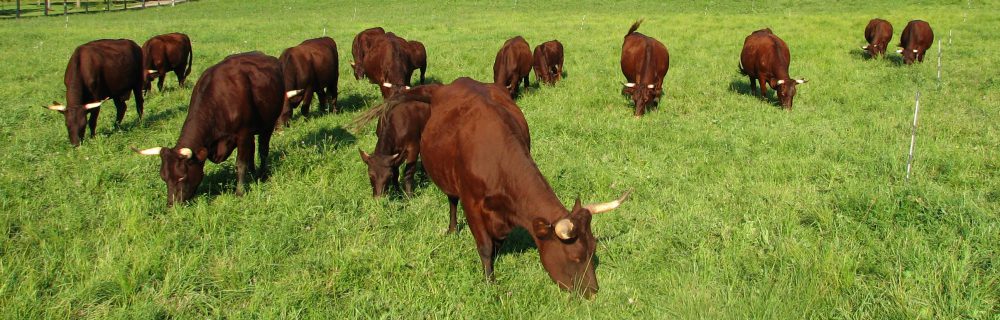
The versatile stone boat

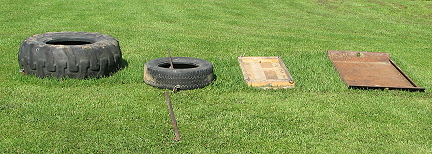
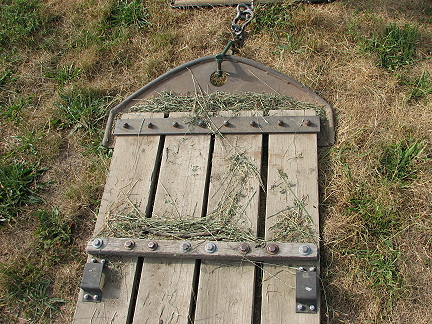
The stone boat originated in the north-eastern states where it was used to clear fields of stones and stumps. It was once a standard farm implement and was sometimes known as a drag, skid, or sled. The stone boat is one of the handiest most versatile implements a teamster can have.   It is often more convenient than a wagon or cart for moving heavy or bulky items.  On top of that they can be very easy and inexpensive to make yourself!

A used car tire can serve the purpose by mounting an eye bolt through it and placing a couple of boards in place of the wheel.  I have been hauling stones out of one of our pastures with just such a tire lately.  The tires are free from a local garage and it makes a good training weight for a young team.  Used skidder or tractor tires can also be used.  They make a wonderful tool to exercise your animals on.  Just add whatever you wish for weight.

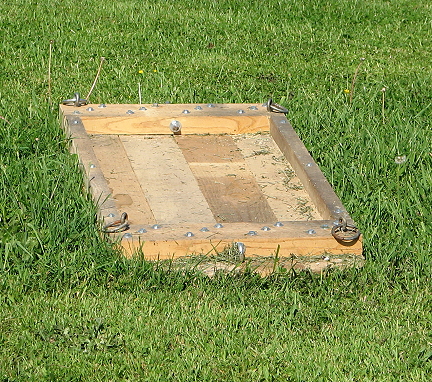
Recycling is great and all but a standard stone boat works better for a variety of chores.  You can make them a simple or as fancy as you wish.  They can be made entirely of wood or can be designed around a manufactured steel head.  They can be designed with replaceable runners or even a dump box or wheels to minimise friction.  I just made one for my calves from some scrap wood found around the farm.  Even some of the hardware was salvaged.  For a few hours of tinkering and less than $30 I have a handy piece of equipment.  Mine is made from Hickory and Oak 2″x6″.  I chamfered both ends and even the sides.  Chamfering the sides will make it turn easier but at the cost of having it  wander sideways when working on a side hill.  I put it together with lag screws, added side rails, a few tie rings and an eye bolt on each end to hitch to.  This style is nice because it can be hitched from either end equally as well.  I wasn’t too concerned about the size and just made do with the material I had.  It turned out around two feet wide by five feet long.  Personally, a good size is two to three feet wide and whatever length you want but it is handy if it fits in a truck bed.  I don’t see any advantage to having it any bigger and the bigger it is the less maneuverable it is.

I will make a separate post later about the wheeled stone boat but here are some ideas to get you thinking in the mean time.  Some of these are very interesting but I think the simple ones are more practical.

US83726     US320178     US641113     US802238     US830097

US846617     US966164     US1055328     USD4732     US641113

The stone boat below uses a scissor action to load large stones and stumps.

US1050396

Now get boating!

As The Pasture Turns: An update and an experiment

Betty and Ann have been coming along well, but lately it has been hard to find the time to work them and it is clear that I need to spend more time with them.  I have been picking stones from the pastures and hauling them away.  This proves to be a great training exercise.  You constantly start and stop; the weight slowly increases; and it requires you to let them stand free while you go picking.  They can dig in when they get together!  I also have a good obstacle course set up in the back yard.  There are plenty of kid’s toys to maneuver around as well as a tarp to walk over, a field of tires to walk through and a mound of saw dust to climb over.  All of these desensitize them and teach trust.  I also have a gate to nowhere set up to practice with.

As I have posted before Betty and Ann have very different personalities.  They are both quality animals just very, very different.  This is a big detriment to them being a team.  Betty is literally dragging Ann a large portion of the time and no amount of correction seems to work.  Lately, they have begun to “haul out” because of this.  “Hauling out” is when the two animals pull outward against each other.  It is ugly and a waste of energy.  I have decided to switch sides and put Ann on the near side and Betty on the off side as an experiment.  Their roles when turning are reversed so they need to learn to turn all over again.  This has confused them and set their training back quite a bit.  I do think they may work together a bit better, but only time will tell.  If all else fails, I may simply use them as singles and forgo the team for now.  I would rather have two good singles than one poor team.  Also, I am sure I will have other cows in the future to team them up with when necessary.

How to get started with oxen

I have been asked to cover the training process more but, after giving it some thought, I have decided there is no place to start but at the beginning.  Before you ever buy an animal do your homework!  You need to prepare and learn as much as you can before the big event.  Cattle are creatures of habit and consistency is one of the keys to training them.  If you have an idea of what to expect and you have a plan as to how you are going to handle them, yoke them, and respond to situations ahead of time you can be much more consistent and proactive.  Hopefully this site will grow to become a great resource but there are many good resources out there.

Some of the best include:

The Draft Animal Power forum: This is an active forum with an international following.  It has a dedicated “oxen” sub forum and is a great place to ask questions online.

Rural Heritage Front Porch:  This is another forum frequented by teamsters.

Midwest Ox Drovers Association: The association has a gathering each year hosted by Tillers International.  This gathering is a great place to meet face to face with a number of teamsters.  You can see several teams of oxen and ask all the questions you want!

Tillers International: Besides being a wonderful host to the MODA gathering each year, Tillers offers several ox related classes.  They have a great facility, staff and other resources like the museum and library.

There are a number of books related to oxen but the two listed below are the best on the training and use of oxen.  They should be considered required reading before purchasing an animal or taking a class.  Both authors are accomplished teamsters with an immense amount of experience.

Oxen: A Teamsters Guide by Drew Conroy:

The Pride and Joy of Working Cattle by Ray Ludwig:

Next time I will cover how to select your animals.